Executive Summary
What the Service Covers
We file and defend complaints under section 489-F of the Pakistan Penal Code, apply for bail, file and defend summary recovery suits under Order XXXVII of the Code of Civil Procedure, draft legal notices and negotiate settlements.
Who Needs It
Traders, landlords, lenders and buyers holding a dishonoured cheque, and individuals or business owners who have been named in a 489-F FIR or served with a recovery suit.
Fee, Time and How to Start
The fee is quoted after we see the cheque, the bank memo and the background documents. Police and court timelines are not in our control, so we do not promise a date or a result. Send the documents on WhatsApp +92 302 6644789; the work is advocate-led and our firm has practised since 1985.
What Section 489-F PPC Says
Section 489-F makes it an offence to dishonestly issue a cheque towards repayment of a loan or fulfilment of an obligation which is dishonoured on presentation. The punishment may extend to three years' imprisonment, or a fine, or both. The section also says the accused is not liable if he establishes that he had arranged with his bank for the cheque to be honoured and that the bank was at fault.
Three elements therefore matter in almost every case: the cheque must relate to a loan or an obligation, it must have been issued dishonestly, and it must have been dishonoured when presented. A case that cannot show one of these is weak, whichever side you are on.
| Route | Forum | What it can achieve |
|---|---|---|
| FIR under section 489-F PPC | Police station, then the trial court | Criminal liability; it does not by itself order repayment |
| Summary suit under Order XXXVII CPC | Civil court of competent jurisdiction | A decree for the amount of the cheque |
| Legal notice | Sent directly to the drawer | A formal demand and a record before litigation |
| Settlement agreement | Between the parties, recorded where needed | Repayment on agreed terms |
How a Cheque Bounce Lawyer in Karachi Helps the Holder
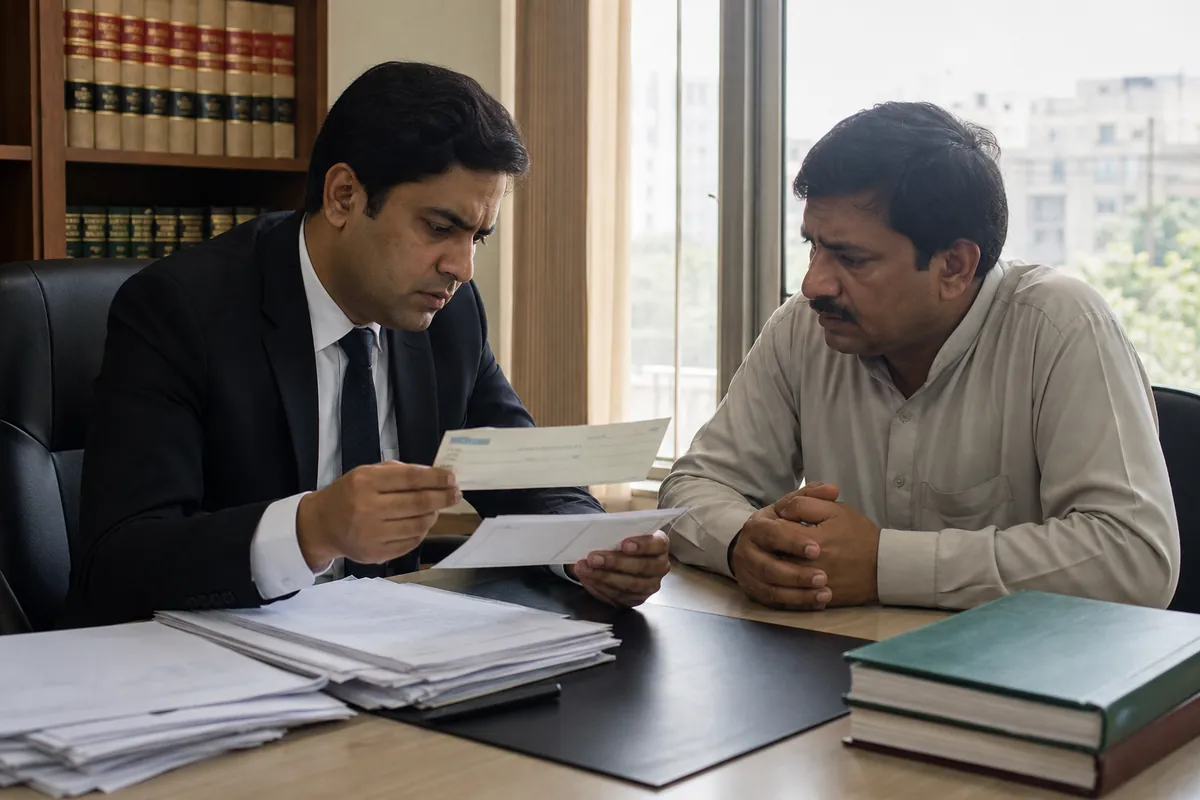
If you hold a bounced cheque, keep the original cheque and the bank's return memo safe; photocopies are not enough at trial. We read the reason given on the memo, such as insufficient funds, payment stopped or account closed, and check the background documents that show why the cheque was given, such as a loan agreement, invoices or a sale agreement.
We then advise whether to send a legal notice, register a criminal complaint, file a summary suit or pursue more than one route. Our legal notice lawyers in Karachi page explains how a notice is drafted and served.
Registering the FIR
The complaint is made to the police station with territorial jurisdiction, with the original documents available for inspection. If the police refuse to register an FIR where an offence is disclosed, the law provides a remedy through the Justice of Peace under sections 22-A and 22-B of the Code of Criminal Procedure.
Filing a Summary Suit for Recovery
Order XXXVII of the Code of Civil Procedure provides a summary procedure for suits on negotiable instruments. The defendant must seek leave of the court to defend, and leave is usually granted only where a plausible defence is shown. This route aims directly at a money decree.
How a Cheque Bounce Lawyer in Karachi Defends the Accused
A 489-F case is not proved merely because a cheque bounced. The defence examines whether the cheque was really given towards a loan or obligation, whether it was issued dishonestly, whether the amount was already paid, and whether the cheque was misused after being given for another purpose. Where a cheque was given only as security or a guarantee, the courts have in some cases held that the section is not attracted, depending on the facts.
Because the maximum punishment is three years, the offence falls outside the prohibitory clause of section 497 of the Code, where the superior courts treat bail as the rule and refusal as the exception. Our bail lawyer in Karachi page explains the process, and where the FIR is legally defective our FIR quashment lawyer in Karachi page explains the remedies.

Evidence the Trial Court Looks At
At trial, the prosecution usually relies on the original cheque, the bank's return memo, the complainant's statement and the documents showing the loan or obligation. A bank officer may be summoned to prove the memo and the account details. The defence may produce receipts of earlier payments, the agreement under which the cheque was given and messages showing how the dispute arose.
Gaps in this chain matter. A complaint that cannot explain what the cheque was for, or that relies on a photocopy, is weaker than one supported by a clear written record, and a defence that cannot show payment or a different purpose is weaker in the same way.
Responding to a Police Notice in a 489-F Complaint
Before an FIR is registered, the police sometimes call both sides to the station to inquire into the complaint. An accused person should not ignore this call, but should also not sign a statement or a fresh undertaking without advice. A short written reply, supported by the documents that explain the cheque, is usually better than an unplanned verbal account. Holders should attend too, with the original cheque and memo, because an inquiry that finds no supporting record can end the complaint at that stage.
Security Cheques and Post-Dated Cheques
In Karachi's trade, rental and instalment business, cheques are often handed over in advance as security or as post-dated instalments. Disputes arise when such a cheque is presented after the relationship has ended or for an amount the drawer says is not owed. The answer depends on the written terms, the payments already made and the account between the parties.
Anyone giving a security cheque should record in writing what it secures and when it is to be returned. Anyone holding one should keep the agreement that explains it, because without that document the purpose of the cheque becomes a matter of competing stories.
Settlement and Compromise
Many cheque disputes end in a negotiated repayment schedule. A settlement should state the amount, the instalments, what happens on default and how the pending criminal and civil cases will be dealt with. Whether a compromise can end a criminal case, and with or without the court's permission, depends on the current schedule of compoundable offences, which we check before drafting.
We draft settlement terms so that neither side gives up a right by mistake and so that the court can record the compromise where that is required.
Common Mistakes in Cheque Bounce Cases
Holders often lose the original cheque or memo, delay action for months, or rely only on the FIR and forget that a criminal case does not by itself order repayment. Accused persons often ignore the police notice, make part-payments without receipts, or sign fresh cheques to settle an old one that then bounce as well.
Each of these mistakes can be avoided with early advice. A short consultation at the start usually costs less than repairing the damage later, and it keeps the documents in order for whichever route is chosen.
Cheque Bounce Lawyer in Karachi Fees and Timelines
Our fee depends on whether we draft a notice, register a complaint, defend an FIR, apply for bail or file or defend a suit, and on the amount and documents involved. It is quoted after we see the papers. Police inquiries and court dates move at their own pace, so we give a realistic view rather than a date.
We do not promise that money will be recovered by a certain time or that a case will end in acquittal. We tell you what the documents support and what the next lawful step is.
What to Send Before Your First Consultation
Send a photo of the cheque, the bank's return memo, any agreement, invoice or receipt that explains why the cheque was given, any legal notice already sent or received, and a short account of events in date order. If an FIR or suit already exists, send it and any orders.
For wider defence work see our criminal defence lawyers in Karachi page, and for recovery suits see our civil lawyers in Karachi page. Our network also lists criminal lawyers in Karachi and Islamabad.
Cheque Bounce Lawyer in Karachi: Who Will Handle Your Matter
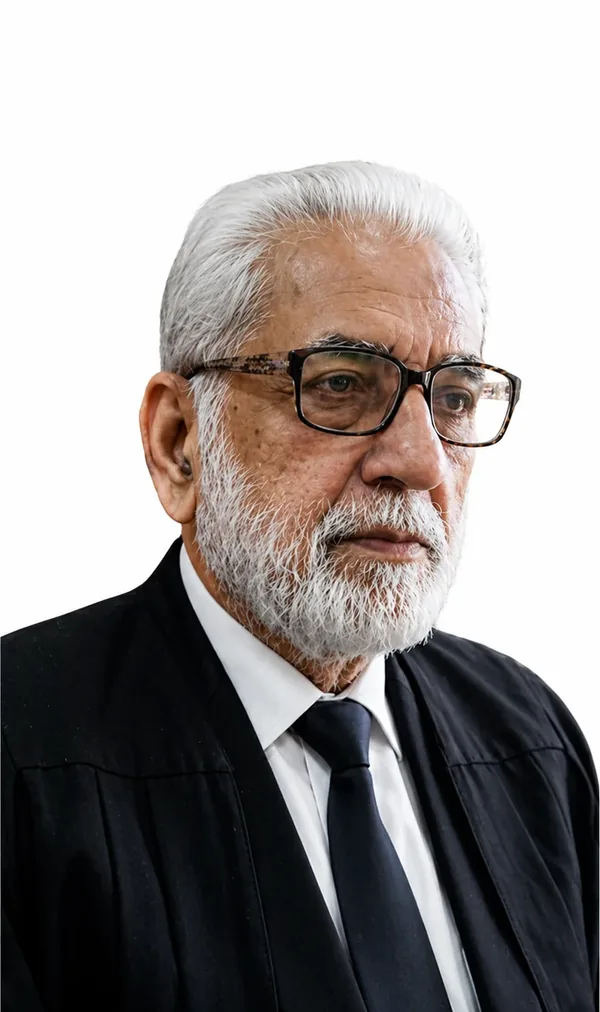
Syed Akhtar Rizvi
Advocate Supreme Court of Pakistan

Mohsin Ali Shah
Senior Legal Consultant, M.A., LL.B. (practising since 1985)
Syed Akhtar Rizvi, Advocate Supreme Court of Pakistan, supervises criminal defence, bail and appellate work. Syed Mohsin Ali Shah, Senior Legal Consultant, practising since 1985, reviews the commercial documents and recovery strategy.
Cheque Bounce Lawyer in Karachi — Frequently Asked Questions
What does a cheque bounce lawyer in Karachi do?
They advise holders and accused persons, register or defend 489-F complaints, apply for bail, file or defend recovery suits and draft settlements.
Is a bounced cheque always a crime?
No. Section 489-F requires a cheque given towards a loan or obligation, issued dishonestly and dishonoured on presentation.
What is the punishment under 489-F?
Imprisonment which may extend to three years, or a fine, or both.
Does an FIR get my money back?
Not by itself. A criminal case decides criminal liability; a summary suit under Order XXXVII CPC aims at a money decree.
Can I file both an FIR and a civil suit?
Often both routes are available. We advise on the right combination after reading the documents.
What if the police refuse to register the FIR?
A petition may be filed before the Justice of Peace under sections 22-A and 22-B of the Code of Criminal Procedure.
I gave the cheque as security. Am I liable?
It depends on the facts and the written terms. Courts have in some cases held the section is not attracted to a pure security cheque.
Is bail available in a 489-F case?
The offence falls outside the prohibitory clause, so bail is generally the rule, but each case is decided on its record.
Should I send a legal notice first?
A notice is often useful as a formal demand and a record, but whether it is needed depends on the route chosen.
How much does a cheque bounce case cost?
The fee depends on the work involved and the amount at stake. It is quoted after we see the documents.
Speak to a Cheque Bounce Lawyer in Karachi Today
Send the cheque and the bank memo on WhatsApp +92 302 6644789 and our team will tell you which route fits your documents and what to do next. Calls are taken from 10 am to 10 pm.
Visit Karachi Office 1 (Head Office) at 2nd Floor, Supreme Corner, Johar Chowrangi, Gulistan-e-Jauhar, or Karachi Office 2 at Mezzanine Floor, Main Jami Commercial, Phase 7, DHA. This page is general information and not advice on your case.
Official Sources and Legal References
Reviewed by: Syed Akhtar Rizvi, Advocate Supreme Court of Pakistan
Published by: Advocates of Pakistan
Last updated: 21 November 2026