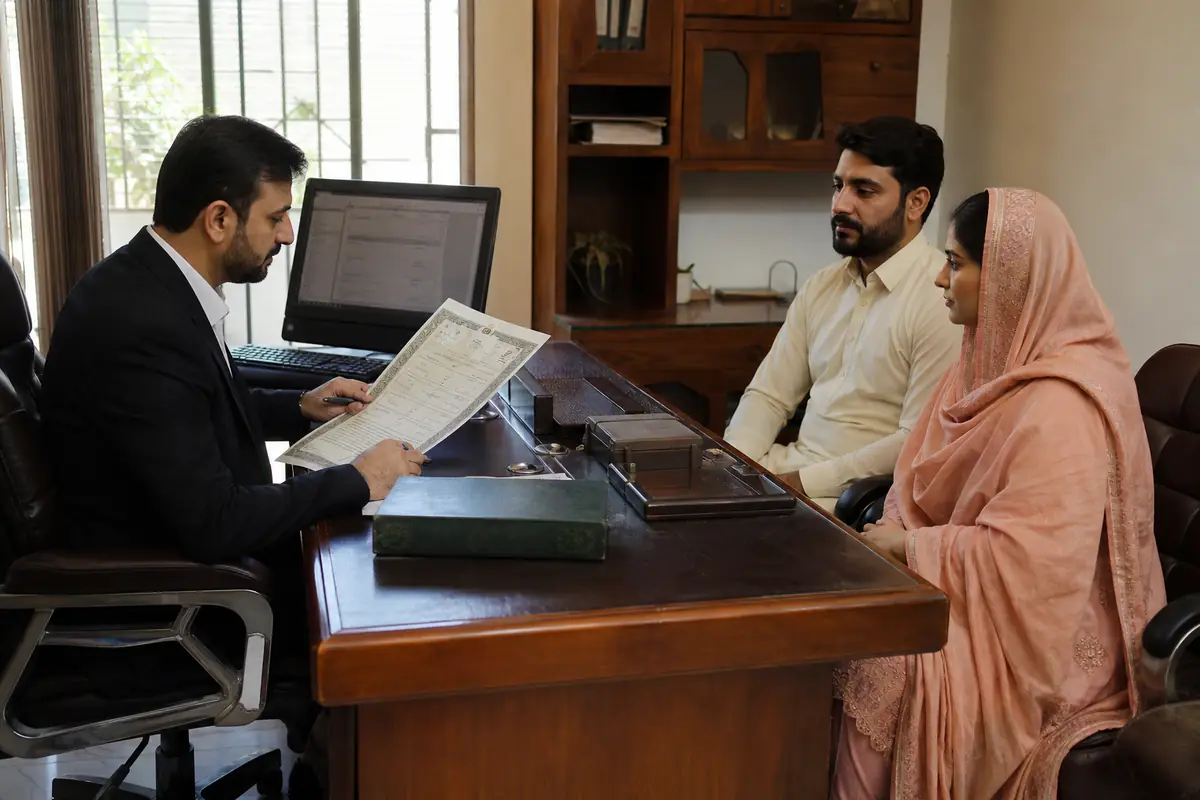
What a Computerized Nikah Nama Actually Is
Under section 5 of the Muslim Family Laws Ordinance, 1961, every Muslim marriage must be registered. The Nikah Registrar licensed by the Union Council completes the prescribed Nikah Nama form at or after the Nikah and sends it to the Union Council for registration. The handwritten or printed Nikah Nama remains the primary marriage document. The Registrar keeps one copy, the Union Council keeps another, and copies are given to the bride and the bridegroom, so a missing copy can usually be traced through any of these offices. Families should keep their copy safely with the CNICs of both spouses, as it is needed for passports, inheritance claims, school admissions and any later family-court matter.
When the Union Council enters that Nikah Nama into NADRA's Civil Registration Management System, a computerised record is created and the Union Council can issue a printed Marriage Registration Certificate (MRC). In everyday language, people call the printed record or the MRC a Computerized Nikah Nama, although legally the Nikah Nama and the MRC are two different documents.
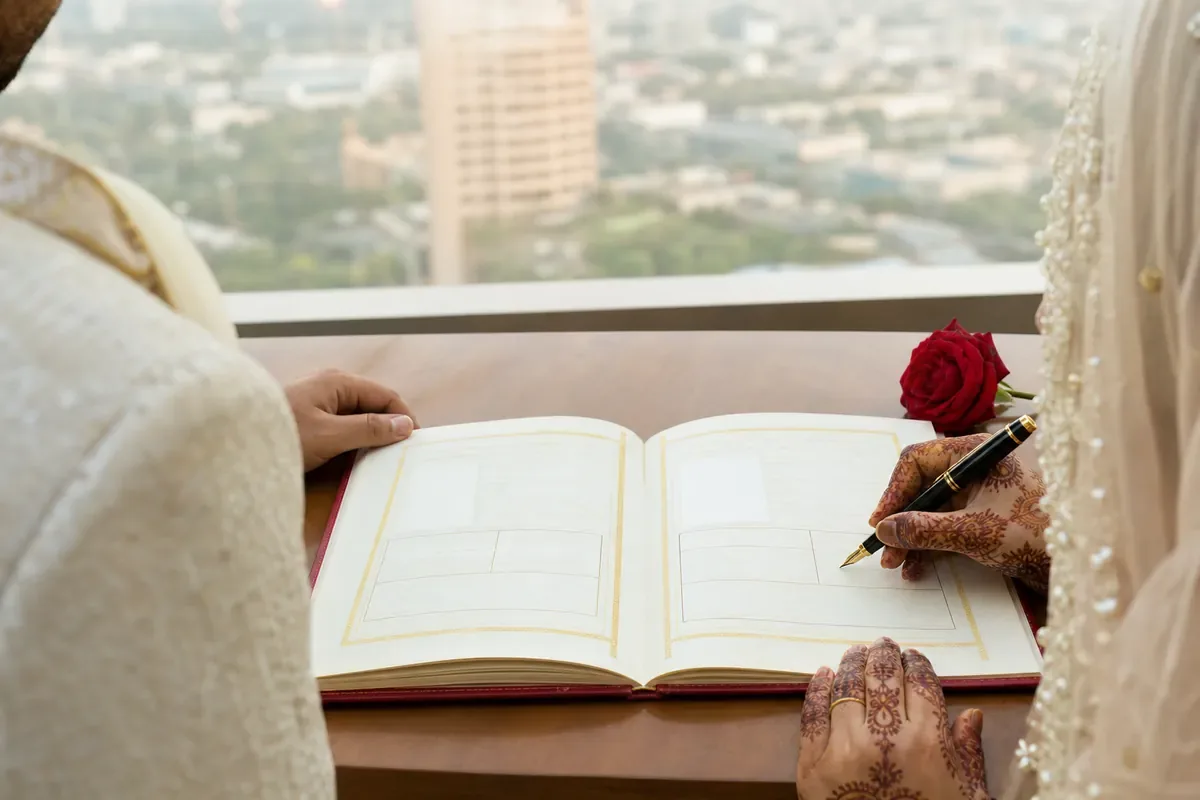
Computerized Nikah Nama Compared With the NADRA Marriage Certificate
This is the question we are asked most often. The table below shows how the documents differ and when each is required.
| Document | Issued by | What it shows | Common use |
|---|---|---|---|
| Nikah Nama (Form II) | Nikah Registrar, registered at the Union Council | Full particulars: parties, Wali/Vakil, witnesses, Mehr, conditions, delegated right of divorce | Primary proof of the Nikah terms; family court cases |
| Computerised Union Council entry | Union Council through NADRA CRMS | Core registration data entered from the Nikah Nama | Basis for the NADRA certificate and CNIC marital status |
| NADRA Marriage Registration Certificate (MRC) | Union Council, printed from NADRA's system | Names, CNICs, date of Nikah, registration details | Embassies, immigration, passport and CNIC updates, MOFA attestation |
How to Get a Computerized Nikah Nama Step by Step
- Make sure the Nikah is performed and recorded by a licensed Nikah Registrar on the prescribed Nikah Nama form.
- The Nikah Registrar submits the Nikah Nama to the Union Council within the time prescribed and pays the registration fee.
- The Union Council secretary enters the record into NADRA's system.
- Either spouse applies to the same Union Council for the NADRA Marriage Registration Certificate with CNICs and the Nikah Nama copy.
- Check every entry on the printed certificate before leaving the office.
Documents Usually Required
- Original or attested copy of the registered Nikah Nama
- CNICs or NICOPs of both spouses
- CNICs of the witnesses and, where relevant, of the Nikah Registrar's record
- Passport copies for a foreign spouse
- Authority letter if a representative applies on the couple's behalf
Where the Nikah Took Place Matters
Registration is done at the Union Council within whose area the Nikah was solemnised, not where the couple now live. For a Nikah performed in Karachi Central, for example, the record must be obtained from that Union Council even if the couple later moved to Lahore or abroad.
Legal Requirements Behind Every Valid Nikah Registration
A record is only as sound as the Nikah behind it. Registration does not cure a Nikah that lacked free consent or where a party was under age, and a family court may look behind the certificate.
- Both parties must be at least 18 in Sindh (Sindh Child Marriages Restraint Act, 2013), Islamabad Capital Territory (2025 Act), Balochistan (2025) and Punjab (amended in April 2026); Khyber Pakhtunkhwa still applies the older federal Child Marriage Restraint Act, 1929, so specific advice is needed there.
- An adult Muslim woman may marry with her own free consent; the Supreme Court confirmed this in Hafiz Abdul Waheed v. Asma Jahangir (PLD 2004 SC 219).
- A husband seeking another marriage during an existing one needs the Arbitration Council's permission under section 6 of the MFLO.
- A divorcee or widow should carry the effective divorce certificate (section 7 MFLO) or the former spouse's death certificate.
Nikah Nama Clauses to Check Before Signing
Because the computerised record is copied from the Nikah Nama, the time to protect both spouses is before the form is signed. Every column of the prescribed form has legal effect, and blank or crossed-out columns are a frequent source of later dispute in family courts.
- Mehr: the amount, whether it is prompt (mu'ajjal) or deferred (muwajjal), and any part paid at the time of Nikah.
- Property or ornaments given in lieu of Mehr, described clearly.
- Column 18: whether the husband has delegated the right of divorce (talaq-e-tafweez) to the wife, and on what conditions.
- Any special conditions agreed between the parties, such as residence or maintenance arrangements.
- Details of any existing marriage of the husband and the Arbitration Council's permission, where applicable.
- Names and CNICs of the Wali or Vakil and the witnesses.
Union Council Practice in Karachi and Other Cities
Karachi's Union Councils fall under the town and district administrations, and each keeps its own register of Nikah Registrars. In Lahore, Islamabad and Rawalpindi, the Union Council or cantonment board performs the same role. Offices also differ in whether applications are accepted from a representative or only from a spouse in person. Practice on fees, waiting time and the format of the printed record varies from office to office, which is why we confirm requirements with the relevant office before a client travels.
Where a family has moved, the record still has to come from the Union Council where the Nikah was registered. We regularly obtain a Computerized Nikah Nama for clients who married in one city and now live in another or overseas, using an authority letter and copies of the original documents.
Correcting Errors in a Computerized Nikah Nama
Spelling mistakes, a wrong CNIC number, an incorrect date of Nikah, or a Mehr amount entered differently from the handwritten form are common. Minor data-entry errors in the computerised record can often be corrected by the Union Council on an application supported by the original Nikah Nama. Where the handwritten Nikah Nama itself is wrong, or the entry is disputed, the matter may need an affidavit, the Nikah Registrar's statement, or in contested cases an order of the competent court.
- Name spelled differently from the CNIC
- Father's name or CNIC number mistyped
- Date or place of Nikah wrong
- Mehr or delegated-divorce clause entered incorrectly
- Record not uploaded at all although the Nikah was registered
Overseas Use, Attestation and Spouse Visas
Embassies and immigration authorities generally ask for the NADRA Marriage Registration Certificate, often with the Nikah Nama, attested by the Ministry of Foreign Affairs and sometimes translated into English. Requirements vary by country, so we check the current checklist of the relevant embassy before the papers are prepared. Mismatched spellings between passport, CNIC and the Computerized Nikah Nama are the most frequent reason for delay.
For couples marrying remotely, see Online Nikah in Pakistan; for certificate verification see NADRA marriage certificate verification; and for the general certificate process read NADRA marriage certificate in Pakistan.
Advocates Handling Computerized Nikah Nama Matters
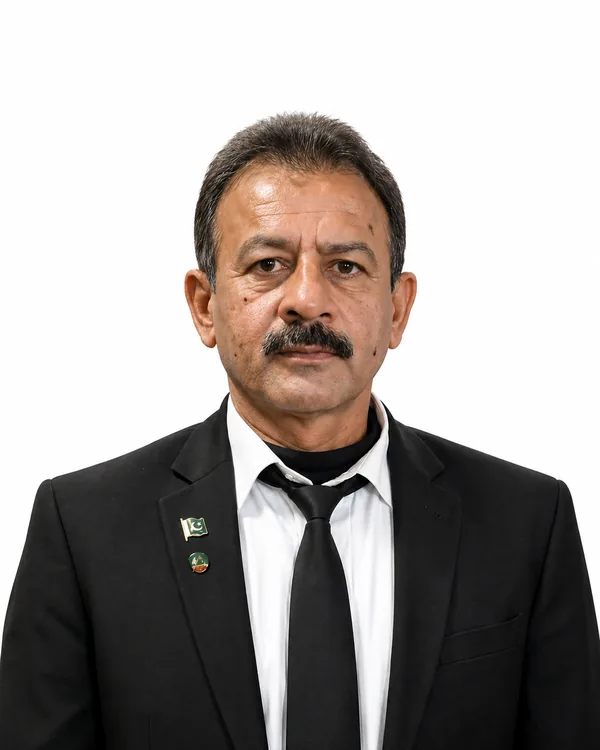
Tahir Pervez Qureshi
Advocate High Court, Karachi
Zaheer Ahmed Qazi
Advocate High Court, Karachi
Our matrimonial desk reviews the Nikah Nama, liaises with the Union Council and prepares any affidavit or application needed for corrections.
Computerized Nikah Nama — Frequently Asked Questions
Is a Nikah Nama the same as a marriage certificate?
No. The Nikah Nama is the original marriage contract registered with the Union Council. The NADRA Marriage Registration Certificate is a computerised certificate printed from the registered record.
Does NADRA perform or register Nikah?
No. NADRA maintains the database. The Nikah is solemnised and recorded by a licensed Nikah Registrar and registered by the Union Council, which issues the computerised certificate.
How long does it take to get the computerised record?
Once the Nikah Nama is registered and uploaded, many Union Councils issue the certificate quickly; delays occur when the Nikah Registrar has not submitted the form.
Can I get the certificate if I live abroad?
Yes, through a relative holding an authority letter or through our office, provided the Nikah was registered with a Union Council in Pakistan.
What if my Nikah was never registered?
Late registration may still be possible, but it usually involves penalties and supporting affidavits. Take legal advice before relying on an unregistered Nikah.
Can a spelling mistake be corrected?
Yes. Data-entry errors are usually corrected by the Union Council on application; errors in the original Nikah Nama may need further evidence.
Is the computerised record accepted by embassies?
The NADRA MRC is widely accepted, usually with MOFA attestation. Always check the specific embassy's current list.
What age is required for marriage registration?
18 for both parties in Sindh, ICT, Balochistan and Punjab under current provincial or territorial laws. Khyber Pakhtunkhwa needs specific advice.
Does my CNIC show my marital status after registration?
After the record is in NADRA's system, marital status and spouse details can be updated on the CNIC through NADRA.
Do you charge for a first review?
A short review of your Nikah Nama on WhatsApp is free. Registration or correction work is quoted after we see the documents.
Get Your Computerized Nikah Nama Right the First Time
A clean Computerized Nikah Nama and matching NADRA certificate save months of trouble with passports, visas and family records. WhatsApp +92 302 6644789 with your Nikah Nama and CNICs and our matrimonial desk will tell you where the record stands, what the Union Council needs and how long it should take.
We see clients at Supreme Corner, Johar Chowrangi, Gulistan-e-Johar, Karachi, and at Main Jami Commercial, Phase 7, DHA, Karachi, and we handle overseas clients by video call.
Official Sources and Legal References
Reviewed by: Tahir Pervez Qureshi, Advocate High Court
Published by: Advocates of Pakistan
Last updated: 13 November 2026