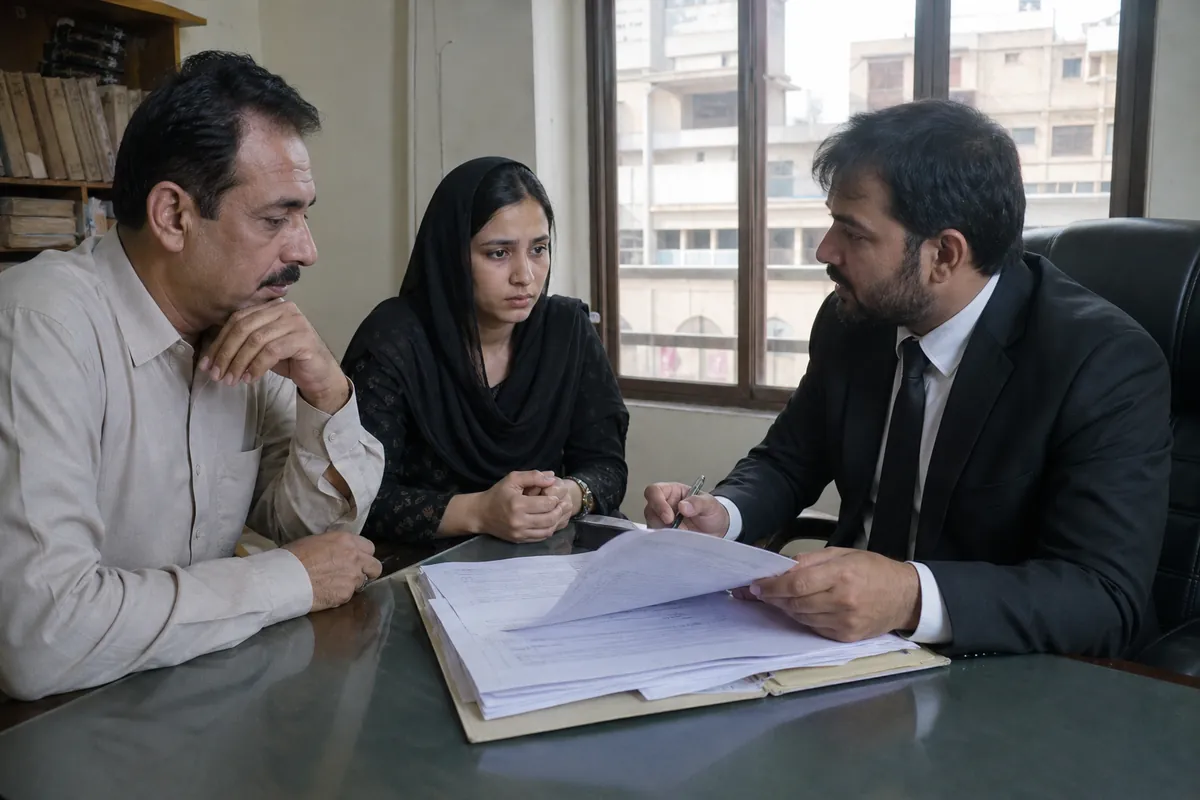
Executive Summary
What the Service Covers
We handle pre-arrest bail, post-arrest bail, remand hearings, surety bonds, bail after rejection and bail cancellation applications before the Magistrate, the Sessions Court and the Sindh High Court at Karachi.
Who Needs It
A person named in an FIR who fears arrest, a family whose relative has been arrested, or an accused whose bail has been refused and who needs the next remedy.
Fee, Time and How to Start
The fee is quoted after we read the FIR and depends on the court, the offence and the number of hearings. Hearing dates are set by the court, so we do not promise a date or a result. Send the FIR on WhatsApp +92 302 6644789 to start; the work is advocate-led and our firm has practised since 1985.
What a Bail Lawyer in Karachi Checks First
Before any application is drafted we read the First Information Report recorded under section 154 of the Code of Criminal Procedure, 1898. We note the sections of the Pakistan Penal Code or special law, the date and time of the incident, the delay in reporting, the role given to each accused person and whether recovery or medical evidence is mentioned. These details decide which ground of bail is realistic.
We also check whether the person has already been arrested, whether a remand order has been passed and whether any earlier bail application was filed. A second application that ignores an earlier order is likely to fail, so the history of the case matters as much as the FIR itself.
Bailable and Non-Bailable Offences Explained
The Second Schedule of the Code of Criminal Procedure states whether an offence is bailable. In a bailable offence, section 496 makes release on bail a right, and the police officer or court must release the person once adequate surety is offered. In a non-bailable offence, release is in the discretion of the court under section 497, and that discretion is exercised on the record of the case.
Within non-bailable offences, the prohibitory clause of section 497(1) applies where the offence is punishable with death, imprisonment for life or imprisonment for ten years. Outside the prohibitory clause, the superior courts have held that bail is the rule and refusal the exception. Inside it, the defence usually has to show reasonable grounds that the case calls for further inquiry under section 497(2).
| Type of bail | When it is sought | Main provision |
|---|---|---|
| Bail in a bailable offence | After arrest for an offence the Schedule marks as bailable | Section 496 CrPC |
| Post-arrest bail | After arrest in a non-bailable offence | Section 497 CrPC |
| Pre-arrest bail | Before arrest, where the accusation is said to be malafide | Section 498 CrPC |
| Bail on statutory delay | Where detention continues beyond the period in the provisos to section 497 | Third proviso to section 497(1) CrPC |
| Cancellation of bail | Where the complainant says bail was wrongly granted or misused | Sections 497(5) and 498 CrPC |
Pre-Arrest Bail Through a Bail Lawyer in Karachi
Pre-arrest bail is an exceptional remedy. The court is asked to protect a person from arrest before the police take custody, and it usually looks for a reasonable possibility that the accusation is malafide, motivated or intended to humiliate, together with grounds that would support post-arrest bail anyway.
Section 498-A matters on the day of the hearing: the court will not grant pre-arrest bail to a person who is not present before it. We therefore plan the appearance, the surety and the papers so that the applicant attends in person and joins the investigation if the court directs it.
When Pre-Arrest Bail Is Usually Refused
Courts are cautious where the applicant has avoided the police, where recovery is still to be made from the accused, or where the allegation is grave and directly supported by evidence. In such cases we explain the risk honestly before anything is filed.
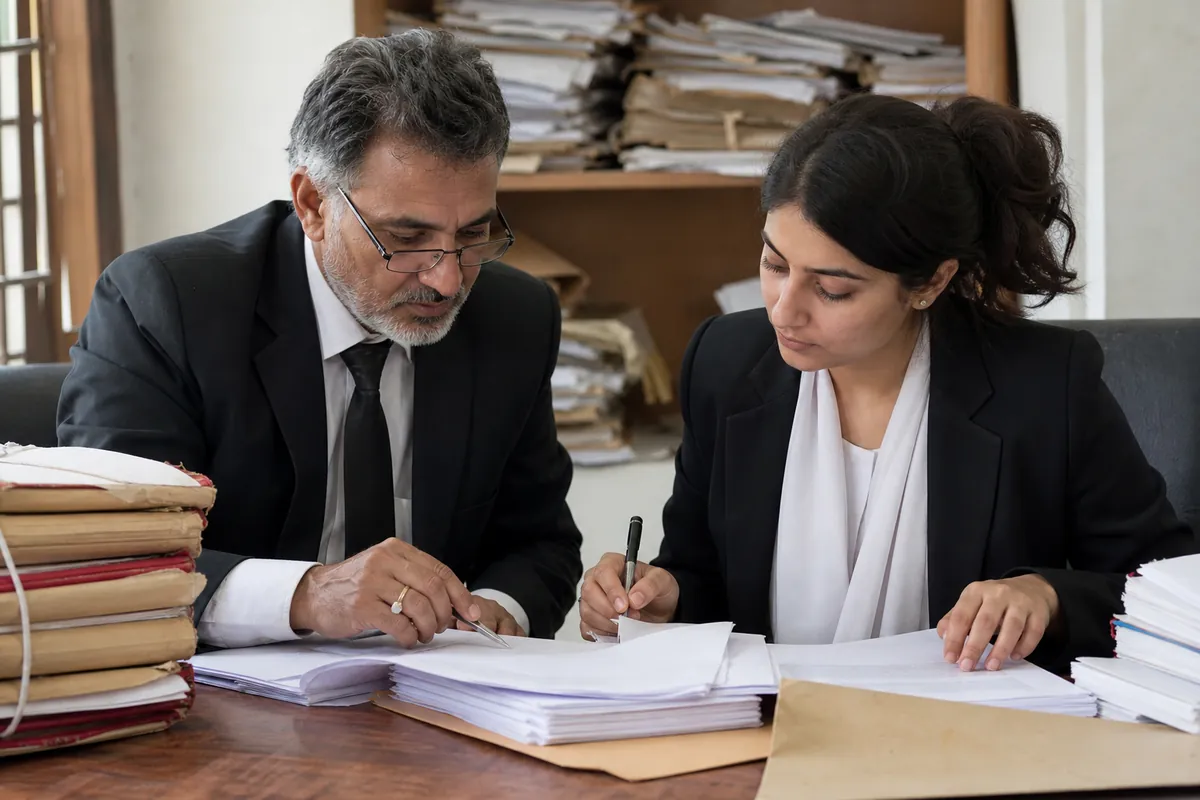
Post-Arrest Bail and the Remand Hearing
After an arrest, the police must produce the accused before a Magistrate and may ask for physical remand under section 167 of the Code. The remand hearing is often the first chance to object to custody, point out gaps in the FIR and record that the accused is cooperating. We attend this hearing wherever we are instructed in time.
Once remand ends, the accused is sent to judicial custody and a post-arrest bail application can be filed. The court considers the material collected so far, the role attributed to the accused, the punishment provided for the offence and whether the case requires further inquiry.
Bail on Statutory Delay
The third proviso to section 497(1) gives a statutory ground where an accused has been detained beyond the period it sets and the trial has not concluded, unless the delay was caused by the accused or another exception applies. We calculate the period from the arrest record before relying on it.
Which Court Hears Bail in Karachi
The Code gives the Sessions Court and the High Court concurrent power under section 498, but practice and case law expect an applicant to approach the Sessions Court first unless there is a good reason. In Karachi, the district in which the police station lies decides which Sessions Court is competent, and cases under special laws may go before a special court with its own bail rules.
If bail is refused by the Sessions Court, a fresh application may be filed before the Sindh High Court at Karachi. A later application on the same grounds is usually not entertained without a fresh ground, so we read the refusal order before advising on the next step.
Surety, Bail Bonds and Conditions
When bail is granted, the court fixes the amount of the bond and the number of sureties. A surety must usually show identity and solvency, for example through property documents or a bank certificate, and the court may verify them before the release order is issued. Delay in arranging the surety is one of the most common reasons a person stays in custody after bail is granted.
The court may also attach conditions, such as appearing on every date or not contacting witnesses. Breach of a condition can lead to cancellation, so we explain each condition to the family in plain language.
Bail Lawyer in Karachi Fees and Realistic Timelines
Our fee depends on the forum, the offence, whether a remand hearing must be attended and how many hearings are expected. It is quoted after we read the FIR and is explained before we start. Bail hearings are fixed by the court, and the date of the first hearing depends on the court's roster, notice to the prosecution and the stage of the case.
We do not promise that bail will be granted. A court decides on the law and the record, and our role is to present the strongest lawful grounds the record supports.
What to Send Your Bail Lawyer in Karachi
Send a clear photo of the FIR, the police station name, the date of arrest if any, the CNIC of the accused and of the proposed surety, any earlier bail or remand order and a short account of events in date order. If the person is in custody, tell us where and since when.
Do not let the accused sign a statement that has not been read to them, and do not discuss the case on social media. For wider defence work, see our criminal defence lawyers in Karachi page, and for quashing proceedings see our FIR quashment lawyer in Karachi page.
Related Criminal Matters We Handle
Many bail applications arise from cheque, online and property disputes. A complaint under section 489-F of the Pakistan Penal Code is handled on our cheque bounce lawyer in Karachi page, and offences under the Prevention of Electronic Crimes Act, 2016 on our cyber crime lawyer in Karachi page. Our network also has a page for criminal lawyers in Karachi and Islamabad.
Bail Lawyer in Karachi: Who Will Handle Your Matter

Syed Akhtar Rizvi
Advocate Supreme Court of Pakistan

Mohsin Ali Shah
Senior Legal Consultant, M.A., LL.B. (practising since 1985)
Syed Akhtar Rizvi, Advocate Supreme Court of Pakistan, supervises bail applications before the Sindh High Court and appellate work. Syed Mohsin Ali Shah, Senior Legal Consultant, practising since 1985, oversees case evaluation and strategy. Local advocates attend remand and Sessions Court hearings.
Bail Lawyer in Karachi — Frequently Asked Questions
What does a bail lawyer in Karachi do?
They read the FIR, identify the competent court, prepare the bail application and surety papers, attend the remand and bail hearings and advise on the next remedy if bail is refused.
Can I get bail before arrest?
Pre-arrest bail may be granted where the accusation appears malafide and the grounds support bail. It is an exceptional remedy and the applicant must be present in court.
Is bail a right?
In a bailable offence it is a right under section 496 once surety is offered. In a non-bailable offence it is in the court's discretion under section 497.
What is the prohibitory clause?
It covers offences punishable with death, imprisonment for life or ten years. Bail in such cases is harder and usually needs grounds of further inquiry.
Should I go to the Sessions Court or the High Court?
Usually the Sessions Court first. The High Court may be approached after refusal or for a good reason recognised by law.
How long does a bail hearing take?
It depends on the court's roster and notice to the prosecution. We do not promise a date, but we file as soon as the papers are complete.
Who can stand surety?
A person whose identity and solvency the court accepts, often shown through property papers or a bank certificate. The court may verify the surety before release.
Can bail be cancelled?
Yes. The complainant may apply for cancellation if bail was wrongly granted or its conditions are breached.
What if my relative is arrested at night?
Send the FIR and police station on WhatsApp straight away. WhatsApp is open 24/7, and we advise on the remand hearing and bail.
How much does a bail application cost?
The fee depends on the court, the offence and the hearings involved. It is quoted after we read the FIR.
Speak to a Bail Lawyer in Karachi Today
Send the FIR on WhatsApp +92 302 6644789 and our team will tell you which court is competent, which ground of bail fits the record and what papers to arrange. Calls are taken from 10 am to 10 pm.
Visit Karachi Office 1 (Head Office) at 2nd Floor, Supreme Corner, Johar Chowrangi, Gulistan-e-Jauhar, or Karachi Office 2 at Mezzanine Floor, Main Jami Commercial, Phase 7, DHA. This page is general information and not advice on your case.
Official Sources and Legal References
Reviewed by: Syed Akhtar Rizvi, Advocate Supreme Court of Pakistan
Published by: Advocates of Pakistan
Last updated: 21 November 2026