
Executive Summary
Quick Answer
Pick the legal form first: society (Societies Registration Act 1860), trust (provincial trust laws enacted in 2020), voluntary social welfare agency (1961 Ordinance) or Section 42 company (Companies Act 2017). Register that entity, then add charity commission enlistment, an NTN, FBR non-profit approval and, if needed, foreign-funding clearance.
Cost
Government fees are about Rs 10,500 for a society and Rs 10,000 for a trust. Our professional fee is Rs 50,000 for documentation only or Rs 100,000 for the complete service. For a Section 42 company our professional fee is Rs 75,000 for documentation only or Rs 150,000 for the complete service.
Time
Plan for at least three to six months, mainly because of the multi-agency verification of founders, office and objects before the certificate issues.
How to Start
Send the proposed name, objects, founders' CNICs, office address and expected funding sources on WhatsApp +92 302 6644789. We reply with the recommended route and a document list.
What NGO Registration in Pakistan Actually Means
"NGO" is a description, not a legal form. Pakistani law recognises particular kinds of entities, and an organisation becomes a legal person only when it is registered as one of them. Until then a group of volunteers cannot open a bank account in the organisation's name, sign a lease, receive a grant from an institutional donor or file a tax return.
Many founders also search for NPO registration or ngo formation. The idea is the same: create a lawful, non-profit body whose income is used only for its objects. The choice of route decides who controls the organisation, which regulator it reports to, how donors see it and how hard it is to change later, so the decision deserves care before any paper is signed.
Routes for NGO Registration in Pakistan Compared
The table sets out the routes most often used and the regulator for each. Provincial details differ, so we confirm the current position in your province before drafting.
| Route | Governing law | Registering authority | Control and best fit |
|---|---|---|---|
| Society | Societies Registration Act 1860 | Provincial Registrar of Societies; ICT administration in Islamabad | Elected managing committee; membership, community and professional bodies |
| Trust | Provincial trust laws of 2020 (Sindh, Punjab, ICT), replacing the Trusts Act 1882 for public and charitable trusts | Provincial trusts registrar, after the deed is executed and registered | Named trustees; founder or family controlled welfare trusts, madaris, endowments |
| Voluntary social welfare agency | Voluntary Social Welfare Agencies (Registration and Control) Ordinance 1961 | Provincial Social Welfare Department | Welfare work in scheduled fields such as child, women, patient, elderly and disability welfare |
| Section 42 company | Companies Act 2017, Section 42, with the Companies Regulations 2024 | SECP licence, then incorporation | Board of directors; national reach and strongest institutional donor confidence |
| Charity enlistment (extra layer) | Punjab Charities Act 2018; Sindh Charities Registration and Regulation Act 2019 | Punjab Charity Commission; Sindh Charity Commission | Organisations raising or spending charitable funds in that province |
Society Route
A society needs at least seven persons who subscribe a memorandum of association and rules and file them with the Registrar. It suits organisations run by members who elect a committee. Read our full guide to society registration in Pakistan.
Trust Route
A trust is created by a deed executed by the author of the trust, on the stamp duty payable in the province, and registered with the Sub-Registrar under the Registration Act 1908. Under the provincial trust laws of 2020 the trust must also be registered with the trusts registrar before it can function. See trust registration in Pakistan and, for Sindh, trust registration in Karachi.
Section 42 Company Route
Three or more persons may apply to SECP for a licence under Section 42 and, once licensed, incorporate a company that cannot pay dividends to its members. This route is explained in detail on our NPO registration as a Section 42 company page.
Social Welfare Agency and Charity Commission
Registration under the 1961 Ordinance is administered by the provincial Social Welfare Department for welfare work in the scheduled fields; the agency must keep its funds in its own bank account and open its records to inspection. In Punjab, the Punjab Charities Act 2018 requires charities that collect funds to register with the Punjab Charity Commission, and Sindh has a similar Charity Commission. Enlistment is an extra layer on top of the underlying registration, not a replacement for it.
How to Choose the Right Structure
For a small neighbourhood welfare group a society or social welfare agency is often enough. A family foundation usually prefers a trust. An organisation seeking large grants, especially from abroad, should seriously consider a Section 42 company. If you are based in Sindh, our NGO registration in Karachi guide explains the local offices.
- Who should control the organisation: elected members (society), named trustees (trust) or a board of directors (Section 42 company)?
- Where will you work: one province, or several? Provincial registration does not automatically cover work elsewhere.
- Who will fund you: local donors and zakat, corporate CSR, or foreign institutions that expect board governance and audited accounts?
- How much reporting can you manage: a Section 42 company carries the heaviest filing duties.
- Do you hold or plan to receive land or a building: a trust or Section 42 company often handles property more cleanly.
NGO Registration Process in Pakistan Step by Step
Whatever route you take, the ngo registration process follows the same broad stages. Skipping the first stage is the most common reason files are returned.
- Structure review: we look at your objects, founders, area of work and funding and recommend the route.
- Name check: the proposed name is checked with the relevant registrar or reserved with SECP, avoiding restricted words.
- Drafting: memorandum and rules, constitution, trust deed or memorandum and articles drafted to match the chosen law, with clear non-profit and non-distribution clauses.
- Execution: signatures of founders, stamp duty on the trust deed and registration with the Sub-Registrar where applicable.
- Filing: application lodged with the Registrar of Societies, trusts registrar, Social Welfare Department or SECP.
- Verification: office inspection, founder and trustee background checks and security clearance by the agencies concerned.
- Certificate: registration certificate issued and certified copies of the constitutional documents obtained.
- After registration: NTN, bank account, charity commission enlistment where required, and FBR non-profit approval.
Can NGO Registration in Pakistan Be Done Online?
Partly. The SECP licence and incorporation for a Section 42 company are filed online through SECP's eServices, the Punjab and Sindh charity commissions run online portals, and NTN and the FBR non-profit application are made through IRIS. Society and trust registration still involve physical signatures, stamp paper and attendance before the Sub-Registrar or registrar in most districts, so ngo registration online is usually a mix of online forms and office visits.
Documents and Requirements for NGO Registration in Pakistan
The requirement for ngo registration varies by route, but nearly every file needs the following:
- CNIC copies, photographs and particulars of all founders, members of the governing body, trustees or directors.
- A precise statement of lawful non-profit objects and the area of operation.
- Memorandum and rules (society), constitution (social welfare agency), trust deed (trust) or memorandum and articles (Section 42 company).
- Proof of office: tenancy agreement or ownership document with a recent utility bill and the owner's NOC.
- Resolution or minutes forming the organisation and appointing the first governing body.
- Expected sources of funds and a basic budget; for Section 42, income and expenditure estimates.
- Undertakings, affidavits and security clearance forms required by the authority.

NGO Registration Cost and Time in Pakistan
Search results for ngo registration cost or ngo registration charges often show only the government challan. That is a small part of the budget. The table below lists the figures we can confirm; anything else is quoted after we see the file.
| Item | What it covers | Amount | Time |
|---|---|---|---|
| Government fee — society | Registration challan under the Societies Registration Act 1860 | About Rs 10,500 | Part of the overall process |
| Government fee — trust | Registration fee with the trusts registrar; stamp duty and Sub-Registrar fees are additional | About Rs 10,000 | Part of the overall process |
| Documentation only | Drafting of constitution or trust deed and preparation of the file; follow-up by the client | Rs 50,000 professional fee | Drafting within days of receiving papers |
| Complete service | Structure advice, drafting, filing and our follow-up through verification to certificate | Rs 100,000 professional fee | Usually three to six months |
| Section 42 company | SECP licence, incorporation and first filings | Quoted after review | Licence stage is the longest |
| Charity commission, FBR approval, annual compliance | Enlistment, section 2(36) application, returns and filings | Quoted after review | Depends on authority |
FBR NPO Approval and Tax Credit for Donors
Registration does not make an organisation tax-exempt. After registration it needs its own NTN, must file returns and meet withholding duties, and may apply to the Commissioner Inland Revenue for approval as a non-profit organisation under section 2(36) of the Income Tax Ordinance 2001. Approval depends on the objects, the governing documents and how funds are actually used, and it is reviewed periodically.
Approval matters to donors as well: individuals and companies who give to an approved non-profit organisation may claim a tax credit under section 61 of the Ordinance, within the limits set there. Corporate donors often ask for the approval letter before releasing CSR funds. See our NTN registration guide for the first step.
Foreign Funding and International NGOs
A local organisation that wants to receive foreign contributions must follow the Economic Affairs Division policy for local NGOs and NPOs, which generally requires signing an MoU with the government and project-wise clearance, together with banking controls. International NGOs that want to work in Pakistan register separately with the Ministry of Interior. A Section 42 company must also meet SECP's requirements, including security clearance for foreign donors and directors.
Do not accept foreign money before these clearances are in place. Banks screen these receipts closely, and an organisation that skips the process risks frozen accounts and cancellation of registration.
Common Mistakes in NGO Registration in Pakistan
- Objects drafted too broadly or mixing business with charity.
- Copying another organisation's constitution that does not match the law you are registering under.
- Using a residential address that cannot be verified as an office.
- Choosing a trust when the founders want elected membership, or a society when a family wants permanent control.
- Treating charity commission enlistment as if it were the registration itself.
- Collecting donations before the bank account is open in the organisation's own name.
- Ignoring FBR returns after registration, which later blocks donor payments and the section 2(36) approval.
After Registration: Compliance That Keeps the NGO Alive
Keep minutes of governing body meetings, maintain books of account and have them audited where the law or donors require it, file annual returns with the registrar or SECP, report changes of office bearers, trustees or address, renew charity commission enlistment and file income tax returns every year. Organisations that fall behind on these duties usually find their bank account restricted long before any regulator writes to them.
We offer an annual compliance retainer for societies, trusts and Section 42 companies, and can also help where a business owner wants a separate commercial vehicle through company registration in Pakistan.
Corporate Lawyers Handling NGO Registration in Pakistan
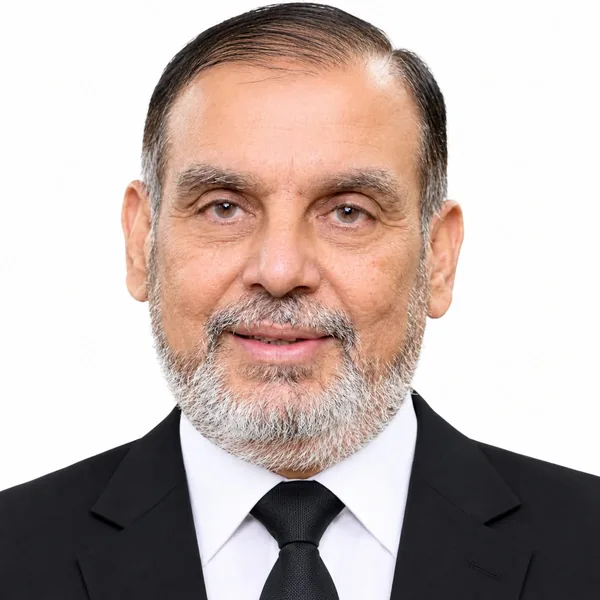
Mohsin Ali Shah
Senior Legal Consultant (Corporate & Tax), M.A., LL.B.
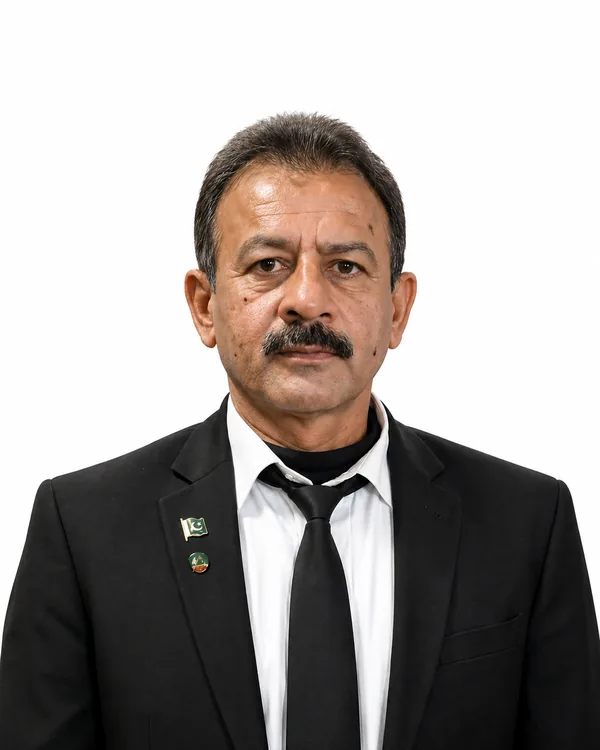
Tahir Pervez Qureshi
Advocate High Court, Karachi

Sobia Mohsin
Advocate, Family & Corporate Documentation
Mohsin Ali Shah, Senior Legal Consultant (Corporate & Tax), advises on structure, SECP licences and FBR approval. Tahir Pervez Qureshi, Advocate High Court, reviews trust deeds and constitutions. Sobia Mohsin, Advocate, runs the documentation desk and follows files through registrars and verification.
NGO Registration in Pakistan — Frequently Asked Questions
Is there a single NGO registration law in Pakistan?
No. An NGO is registered as a society, a trust, a voluntary social welfare agency or a Section 42 company, each under its own law. Charity commission enlistment and FBR approval are separate layers.
What is the cost of NGO Registration in Pakistan?
Government fees are about Rs 10,500 for a society and Rs 10,000 for a trust. Our professional fee is Rs 50,000 for documentation only or Rs 100,000 for the complete service. Section 42 licences, charity enlistment and FBR approval are quoted after review.
How long does NGO Registration in Pakistan take?
Usually at least three to six months, mainly because several agencies verify the founders, office and objects before the certificate is issued.
How many members are needed to register an NGO?
At least seven for a society and at least three subscribers for a Section 42 company. A trust needs an author and trustees named in the deed; the number depends on the deed and provincial law.
Can NGO Registration in Pakistan be done online?
Partly. Section 42 licences, charity commission enlistment and FBR applications are online, but society and trust registration still need signatures, stamp paper and office visits in most districts.
Which is better, a trust or a society?
A trust suits founders or families who want control through named trustees. A society suits organisations run by members who elect a committee. The right answer depends on control, work and funding.
Does registration make an NGO tax-exempt?
No. The organisation must obtain an NTN and apply separately for approval as a non-profit organisation under section 2(36) of the Income Tax Ordinance 2001. Donors to approved organisations may claim a tax credit under section 61.
Can a registered NGO receive foreign funding?
Only after following the Economic Affairs Division policy for local NGOs and NPOs, which generally involves an MoU and project clearance. International NGOs register with the Ministry of Interior.
Do I need Punjab Charity Commission registration?
If your organisation collects or spends charitable funds in Punjab, the Punjab Charities Act 2018 generally requires registration with the Punjab Charity Commission in addition to your society, trust or company registration.
Can you register an NGO for founders living abroad?
Yes. A resident representative can act under a power of attorney, but every founder's particulars and verification still apply. We handle the drafting and filing from Karachi.
Start Your NGO Registration in Pakistan the Right Way
A well-chosen structure and a carefully drafted constitution save months at verification and years of trouble with banks and donors. WhatsApp +92 302 6644789 with your proposed name, objects and founders, and we will recommend a route and a document list.
We see clients at 2nd Floor, Supreme Corner, Johar Chowrangi, Gulistan-e-Johar, Karachi, and at Main Jami Commercial, Phase 7, DHA, Karachi. Calls 10 am to 10 pm; WhatsApp 24/7.
Official Sources and Legal References
Reviewed by: Mohsin Ali Shah, Senior Legal Consultant (Corporate & Tax)
Published by: Advocates of Pakistan
Last updated: 16 November 2026